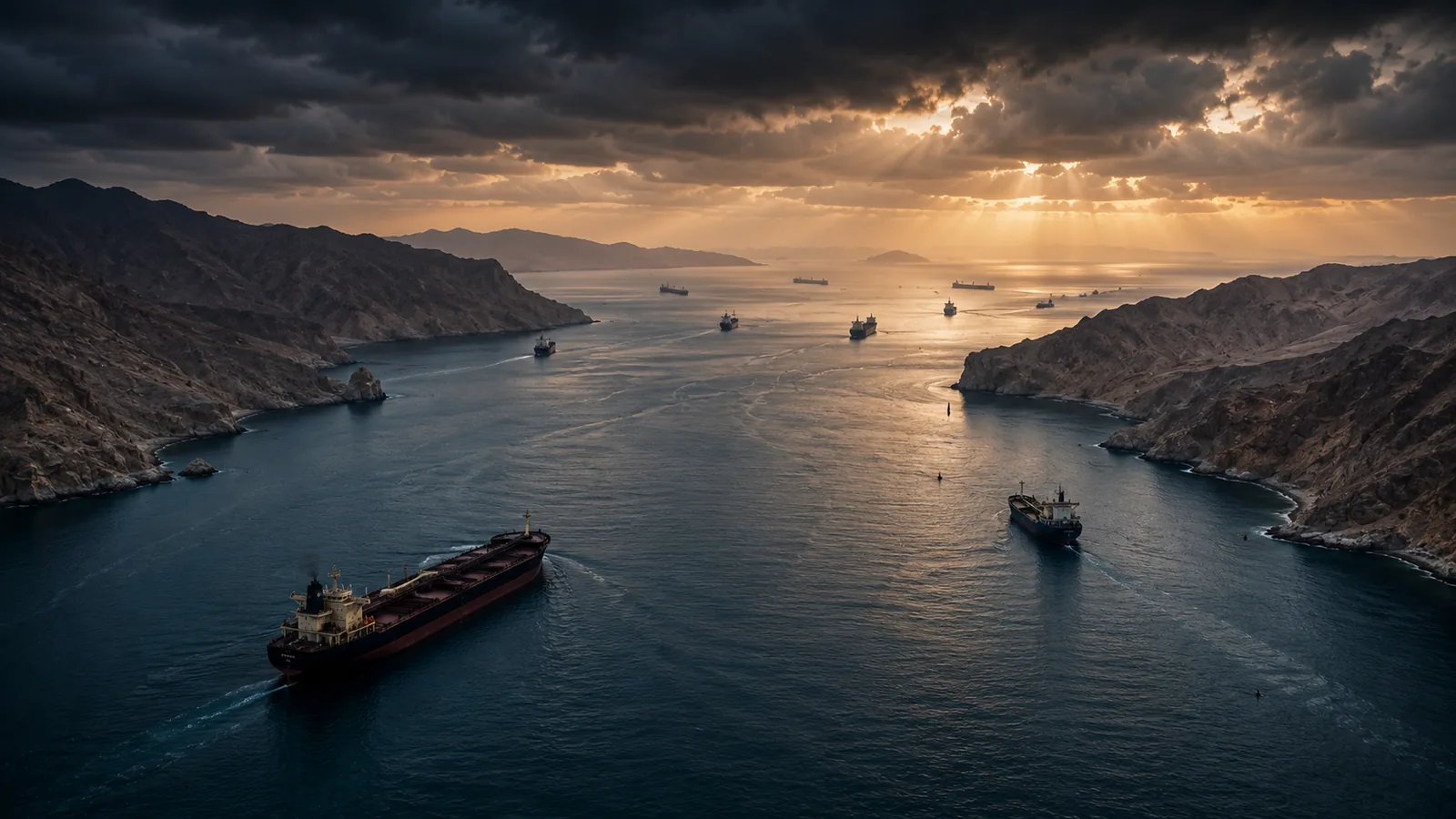
September 22 evening update: Turkey, Egypt and Pakistan joined Saudi Arabia on the sidelines of the U.N. General Assembly in affirming Riyadh’s right to defend itself against Houthi attacks and emphasizing safe navigation. The statement adds a regional diplomatic alignment around Saudi security as the Yemen conflict and shipping disruption widen.
September 22 update: Saudi Arabia restarted its East–West Pipeline at a reduced rate after drone attacks shut it down on September 13. The route allows Saudi oil to reach the Red Sea without passing through the Strait of Hormuz. Britain will also provide limited aerial-refueling support for Saudi defensive operations, while the G7 has called on the Houthis to stop their attacks and urged Iran to end its support for the group.
September 17 update: Falling debris from an intercepted Houthi drone killed a Yemeni resident and injured a Saudi woman and a Pakistani man in Taif province. It is the first reported civilian death in Saudi Arabia during the renewed escalation. Saudi and Houthi forces also exchanged fresh strikes as fighting continued on both sides of the border.
Only four visible commodity vessels crossed the Strait of Hormuz on Thursday, compared with a ten-day average of sixteen. Saudi work to restore part of the East–West Pipeline and move more oil through Oman helped ease immediate market fears, but neither the pipeline nor shipping through Hormuz has returned to normal.
September 16 update: Saudi-backed forces acknowledged carrying out airstrikes against Houthi positions in Yemen as the conflict expanded into more active Saudi–Houthi warfare. The Houthis claimed additional missile and drone attacks against Yanbu and Khamis Mushait, but Saudi authorities did not confirm those specific strikes. A Houthi claim that it downed a Saudi F-15 also remains unconfirmed.
Saudi Arabia also began offering more crude to Asian refiners through ship-to-ship transfers near Sohar, Oman—outside the Strait of Hormuz—while increasing loadings at terminals inside the Gulf. These workarounds may move some oil despite the disruption, but the East-West Pipeline remains shut, Yanbu loadings remain suspended and some European cargoes have been canceled.
September 15 update: Only four commodity vessels crossed the Strait of Hormuz on Monday, versus roughly 125 large commercial vessels per day before the war, according to Kpler data reported by Reuters. Saudi Arabia also canceled some September-loading oil cargoes to Europe after damage to the East-West Pipeline forced the suspension of loadings at Yanbu. European buyers began seeking replacement crude, while physical Brent cargo prices exceeded $120 per barrel. The combined disruption is constraining both the primary Gulf route and Saudi Arabia’s main bypass. The repair timeline remains uncertain: the U.S. energy secretary said partial flow could resume within days, while other sources told Reuters repairs could take five to six weeks.
September 14 update: Iran-aligned Houthi forces seized Greater and Lesser Hanish islands after their advance through Mocha and Perim, expanding their position around the Bab el-Mandeb route. Saudi Arabia’s damaged East-West Pipeline—the main bypass around the disrupted Strait of Hormuz—is expected to remain partly or fully out of service for three to five weeks. Gulf-Iran talks concerning Hormuz were also postponed. Pressure is now converging on the Persian Gulf route, its Saudi pipeline bypass and the Red Sea outlet.
September 13 update: Saudi Arabia’s East-West oil pipeline remains shut after last week’s attack. Traders told Reuters that the Red Sea port of Yanbu has enough stored oil to keep exports moving for only five to seven days if the line does not restart. The pipeline has been moving about 4 million barrels a day around the closed Strait of Hormuz. If it stays down, about 4% of world oil supply could be at risk. Houthi forces also remain near the Bab el-Mandeb route at the southern end of the Red Sea.
Late September 12 update: Iraq’s prime minister’s office says investigations confirmed the drones used in the Saudi East-West pipeline attack were launched from Maysan province in southern Iraq. Baghdad dismissed the Maysan operations commander and opened an investigation; Iraq also moved to close the Shalamcheh crossing with Iran while pursuing those responsible. Saudi Arabia says it will not retaliate at this stage after Iraq’s prime minister asked for time to act, while reserving the right to protect its sovereignty and critical infrastructure. The launch origin is now confirmed by Iraqi authorities, but responsibility for who ordered or carried out the attack remains unresolved.
September 11 update: Iran-aligned Houthi forces reached strategic Perim (Mayun) Island at the mouth of the Bab el-Mandeb after advancing along Yemen’s Red Sea coast. Reuters also reported disruption to Saudi Arabia’s East-West oil pipeline, a key route used to bypass the Strait of Hormuz. The convergence increases pressure on both Gulf and Red Sea energy routes while Hormuz traffic remains sharply depressed.
September 10 update: Iran-aligned Houthi forces seized the strategic Yemeni port of Mocha on the Red Sea coast and advanced toward the Hanish Islands, increasing their position near the Bab el-Mandeb chokepoint. Reuters notes that roughly 7% of global oil output moves through Bab el-Mandeb. Oil prices surged more than 6% on September 10 as markets absorbed the combined pressure from tanker attacks, Hormuz disruption and the Houthi advance.
Earlier development: Houthi missiles and drones had already struck Saudi cities, utilities and energy infrastructure, including sites associated with Saudi Aramco and the Jazan refinery. The territorial advance now adds a second dimension to the signal: direct attacks on Saudi energy infrastructure and expanding Houthi control near a major maritime route.
Possible prophetic relevance: The widening conflict shows how quickly regional warfare can draw additional nations into Middle East security and threaten the energy routes that support the global economy.
Signal Note: HIGH SIGNAL + UPDATED + ESCALATED. The pipeline restart may ease some supply pressure, but it is not yet operating at full capacity. Britain describes its support as defensive, not participation in attacks inside Yemen. Watch for higher pipeline volumes, renewed Yanbu exports, further Western involvement and any verified reopening of the Strait of Hormuz.